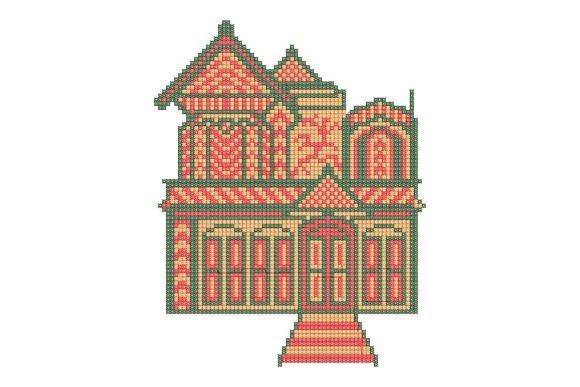
Cross Stitch House: A Designer’s Real-World Review
As an embroidery designer who has spent years digitizing patterns and testing them on everything from delicate silk to heavy denim, I approach every new machine embroidery design with a critical eye. It is not enough for a motif to look pretty on a screen; it must hold up under the needle, survive the wash, and appeal to the end customer. Recently, I evaluated Cross Stitch House, a charming entry in the Cities category of Embroidery assets, to see if it truly delivers on its promise to transform fabric into a work of art.
First Impressions: Mood and Visual Personality
The first thing that strikes you about Cross Stitch House is its nostalgic warmth. In a market saturated with ultra-modern minimalism or overly complex photorealistic digits, this design leans into a cozy, handcrafted aesthetic. The layout suggests a quaint, perhaps whimsical structure, evoking feelings of home, comfort, and tradition. For a designer, this mood is invaluable. It does not scream for attention; instead, it invites a closer look.
The visual personality here is key. It feels approachable and friendly, which makes it highly versatile. When I visualize this embroidery file on a product, I do not see it as a loud statement piece but rather as a subtle accent that adds character. This is crucial for Etsy sellers and small shop product creators who need designs that complement their brand without overpowering it. The shape and theme suggest a narrative, making it ideal for projects where storytelling matters, such as personalized gifts or boutique branding.
Real-World Application: The Tote Bag Test
To truly understand how Cross Stitch House performs, I imagined a specific real-life scenario: creating a custom canvas tote bag for a local farmer’s market vendor. The client wanted something that felt artisanal and grounded. I placed the design centrally on a natural cotton canvas. Here, the design’s clarity shone. The lines were distinct, and the thematic elements translated well to the textured surface of the canvas.
This tote bag design concept works because the motif is recognizable even from a distance. For craft business owners, this recognizability translates to sales. Customers browsing a craft fair or scrolling through an online store need to instantly grasp the vibe of a handmade product. Cross Stitch House achieves this balance. It is detailed enough to look professional but simple enough to remain legible on various fabric texture types. Whether used on a sturdy apron, a kitchen towel, or a pillow cover, the design maintains its integrity.
Versatility Across Product Lines
Beyond totes, I considered how this design would function in other common embroidery project scenarios. For sweatshirt embroidery, the cozy theme aligns perfectly with the garment’s purpose. Imagine a heather grey crewneck with Cross Stitch House stitched on the left chest in muted earth tones. It creates a high-value perception, turning a basic garment into a personalized gift or a premium custom apparel item.
For baby embroidery, the gentle nature of the house motif is appealing. However, one must be cautious with scale. On smaller items like onesies or bibs, the design might need to be resized carefully to ensure that tiny details do not become lost or cause puckering. Similarly, for holiday embroidery, this design could easily be adapted with seasonal thread colors—think reds and greens for Christmas or pastels for spring—making it a year-round asset for digital embroidery file libraries.
Technical Considerations and Stitching Clarity
From a technical standpoint, the success of any machine embroidery design depends on stitch execution. While I do not have the exact stitch count or density metrics for Cross Stitch House at hand, I can infer several best practices based on its visual complexity. Designs that mimic cross-stitch or architectural elements often rely on a mix of fill stitch areas and finer running stitch outlines.
When working with this type of motif, stitch density is a critical factor. If the density is too high, the fabric may pucker, especially on lighter materials. If it is too low, the backing may show through, ruining the clean look. I strongly advise testing the design on scrap fabric first. Check how the thread colors interact with your chosen material. High contrast can highlight imperfections, while low contrast can make the design appear muddy.
Another technical note concerns the use of stabilizer. For a design like this, which likely has some structural weight, using a cut-away stabilizer on stretchy fabrics like t-shirts or sweatshirts is essential to prevent distortion over time. On woven fabrics like linen or cotton, a tear-away might suffice, but always test first. The goal is to ensure that the finished product looks crisp and professional, not tangled or distorted.
Where to Use Caution
While Cross Stitch House is versatile, it is not universal. There are specific situations where this design should be used carefully. First, consider the hoop size. If you are working with a small hoop, ensure the design fits comfortably without hitting the edges. Crowding a design near the hoop border can lead to skipped stitches or misalignment.
Second, be mindful of curved surfaces. Embroidering on caps or hats requires specialized techniques and often simplified designs. If Cross Stitch House has intricate corners or fine lettering, these details may not translate well to the curved panel of a baseball cap. In such cases, it might be better suited for flat panels or patches.
Additionally, avoid using this design on very thin or slippery fabrics without proper stabilization and hooping techniques. Delicate silks or rayons can shift during stitching, leading to misaligned elements. For commercial embroidery projects where consistency is key, sticking to stable, medium-weight fabrics will yield the most reliable results.
Enhancing Brand Value and Customer Trust
For creative entrepreneurs and apparel decorators, the choice of design directly impacts brand perception. Using a well-digitized, aesthetically pleasing motif like Cross Stitch House signals professionalism. It shows that you care about quality and detail. This builds customer trust and encourages repeat business.
When creating printable mockup images for your online store, ensure that the digital representation matches the physical reality. Use high-quality photos of the stitched design on actual products. Show close-ups of the stitch quality to highlight the craftsmanship. This transparency helps buyers understand what they are purchasing, reducing returns and increasing satisfaction.
Furthermore, consider the licensing terms. Before selling finished product items or using this as part of a larger design assets package, confirm the license agreement. Most designers offer different licenses for personal and commercial use. Respecting intellectual property rights is fundamental to maintaining a reputable craft business.
Final Verdict
In conclusion, Cross Stitch House is a strong contender for designers looking to add a touch of whimsical charm to their portfolio. Its strength lies in its emotional resonance and visual clarity. It performs well on a variety of standard embroidery substrates, from tote bags to sweatshirts, provided that proper technical precautions are taken. By testing on scraps, choosing appropriate stabilizers, and respecting the limitations of certain fabrics and hoop sizes, you can leverage this design to create high-quality, sellable goods. For the Etsy seller or hobbyist alike, it offers a reliable pathway to creating meaningful, beautiful embroidered items that customers will cherish.