Hanging Flower Pot: A Designer’s Review for Brand Merch
As an embroidery designer who has spent years digitizing patterns and consulting with small business owners, I look at every new machine embroidery design through a specific lens. It is not just about whether the pattern looks pretty on a screen; it is about how it performs in the real world of commercial production. Does it hold up on a uniform after fifty washes? Does it add perceived value to a handmade product? Today, I am reviewing the Hanging Flower Pot design, a charming piece from the Bouquets category, to determine its viability for branded merchandise and small business applications.
First Impressions: Visual Personality and Brand Fit
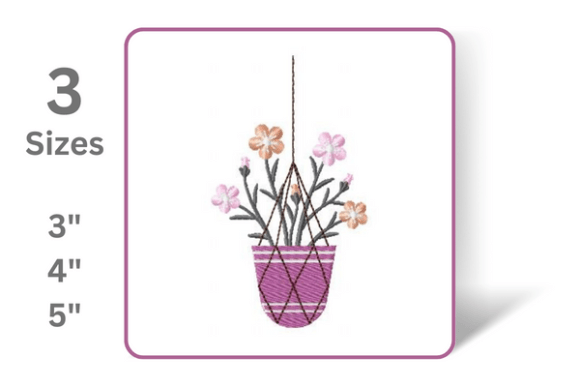
The first thing that strikes me about the Hanging Flower Pot is its inherent warmth. The description promises a "colorful look" suitable for pillows, towels, and apparel, which suggests a design that leans towards the friendly, rustic, and handmade aesthetic. For a brand identity, this is crucial. If you are running a local bakery, a florist shop, or a boutique café, your visual language needs to communicate approachability and care. This design does exactly that. It feels decorative yet grounded, avoiding the sterile look of overly corporate logos while maintaining a professional finish.
However, "wonderful" is subjective. From a technical standpoint, I assess the balance between detail and stitch efficiency. A hanging pot implies structure—the pot itself, the soil, the foliage, and the blooms. In embroidery, these elements must be distinct. If the design is too dense, it becomes stiff; if too sparse, it lacks impact. The promise that it can be embroidered on "any fabric you like to work with" is a bold claim that requires careful verification, as fabric texture plays a massive role in the final outcome of any digital embroidery file.
Real-World Applications for Small Business Merch
Let us move beyond theory and discuss where this design actually shines in a commercial setting. For small business owners, versatility is key to maximizing return on investment. Here is how I envision the Hanging Flower Pot performing across various product lines:
- Apron Embroidery: For florists, baristas, or craft instructors, an apron is both a uniform and a canvas. Placing this design on the chest pocket or lower corner adds a touch of whimsy that customers love. It reinforces the "handmade" vibe of the service provided.
- Tote Bag Design: Canvas totes are staples for retail shops. A colorful floral pot centered on a tote bag creates an instant lifestyle accessory. It transforms a simple bag into a statement piece that customers are proud to carry, effectively turning them into walking billboards for your brand.
- Embroidered Patches: This is perhaps the most versatile application. By stitching the design onto twill or felt and cutting it out, you create an iron-on or sew-on patch. These can be applied to denim jackets, backpacks, or even used as unique product tags for your handmade goods. Patches allow for quality control before application, reducing waste.
- Cap Embroidery: A simplified version of this design could work beautifully on the side panel of a baseball cap. While the front panel might be too curved for a wide pot design, the side offers a flat surface for a subtle, stylish accent that appeals to younger demographics.
Technical Considerations and Production Challenges
While the aesthetic appeal is high, we must address the technical realities of production. The description notes that this is an Embroidery product, but it does not specify stitch count or density. As a designer, I advise caution when dealing with complex floral arrangements on certain materials.
Stitch Density and Fabric Texture: If the Hanging Flower Pot has high stitch density to achieve rich colors, it may pucker lightweight fabrics like silk or thin cotton. Always use a proper stabilizer. For towels, which are mentioned in the description, a cut-away stabilizer is essential to prevent the design from pulling away during washing. For caps, which have a curved, structured surface, you must ensure the design is not too wide, or it will distort around the seam.
Color Contrast and Thread Selection: The design relies on a "colorful look." This means your thread choice is critical. On dark uniforms, such as navy or black staff shirts, you must ensure the flower colors pop. You may need to add an underlay or choose brighter thread shades than you would for light fabrics. Test it in black and white first to check for contrast issues; if the design loses its definition without color, it may rely too heavily on hue rather than shape.
Size Limitations: Be mindful of the hoop size. If you intend to use this as a small chest logo on a polo shirt, ensure the details of the hanging mechanism and individual leaves do not become a muddy mess when scaled down. Small patch sizes require simplified designs. If the original file is large, ask the digitizer if a scaled-down version is available or if minor edits are needed to maintain clarity at smaller dimensions.
Enhancing Brand Identity and Customer Trust
Why go through the trouble of embroidering instead of printing? The answer lies in perceived value. An embroidered Hanging Flower Pot signals quality. It suggests that your brand invests in durability and craftsmanship. For Etsy sellers and craft businesses, this tactile quality differentiates your product from mass-produced items. When a customer receives a tote bag or apron with raised, textured embroidery, they feel a connection to the maker.
This design supports brand consistency. If your logo is minimal, using a decorative element like this Bouquets-themed design as a secondary brand asset can soften your image. It works well for seasonal promotions, such as spring sales or Mother’s Day specials, allowing you to refresh your merchandise without rebranding entirely. It creates a cohesive visual story across your design assets, from your website mockups to the physical finished product.
Practical Designer Notes for Implementation
Before you purchase and start production, follow this checklist to ensure success:
- Verify Commercial Licensing: The description mentions it is a "machine embroidery design," but always confirm the license terms. Ensure you have the right to use it for commercial goods, especially if you plan to sell the embroidered items directly.
- Create a Printable Mockup: Use software to place the design on virtual products. This helps you visualize scale and placement before wasting thread and fabric. Share this mockup with clients for approval if you are doing custom work.
- Test on Real Fabric: Do not skip the test stitch. Run the design on the exact fabric you intend to use for your final product. Check for puckering, thread breaks, or color blending issues.
- Check File Formats: Ensure the embroidery file comes in the format compatible with your machine (PES, DST, JEF, etc.). If not provided, contact the seller immediately.
- Evaluate Wash Durability: If this is for staff uniforms or frequently used towels, wash the test sample multiple times. Ensure the threads do not bleed or fray excessively.
In conclusion, the Hanging Flower Pot is a strong candidate for businesses looking to add a touch of organic charm to their merchandise. It bridges the gap between professional branding and handmade appeal. By paying attention to stabilizer choices, fabric compatibility, and strategic placement, you can leverage this design to create high-value custom apparel and accessories that resonate with your customers. Remember, the best embroidery is not just seen; it is felt. Let this design add that tangible quality to your brand.