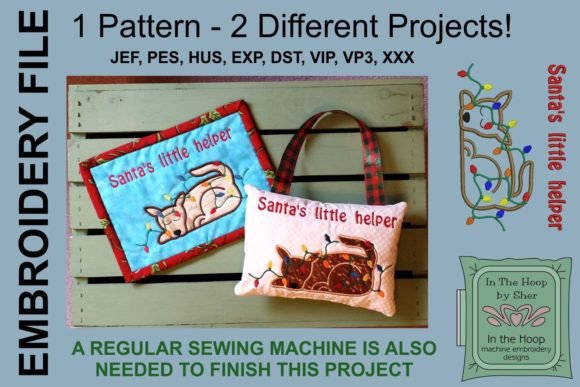
Review: Santa’s Little Helper Mug Rug Design
As an embroidery designer who has spent years digitizing for small businesses, I approach every new machine embroidery design with a critical eye. It is not just about whether the art looks cute on a screen; it is about how that art translates to fabric, how it holds up in the wash, and most importantly, how it serves the brand identity of the client using it. Recently, I reviewed the Santa s Little Helper Mug Rug or Doorknob Hanger file, and while the name suggests a specific home decor application, my focus was strictly on its potential for commercial use. Can this festive motif work as a branded patch? Is it suitable for staff uniforms or boutique merchandise? Let us dive into a professional assessment of this design from a business perspective.
First Impressions: Visual Personality and Brand Fit
The initial impression of the Santa s Little Helper Mug Rug or Doorknob Hanger is undeniably charming. The description highlights a "cute helper design" intended to elevate holiday coffee breaks, which immediately signals a playful, friendly, and warm aesthetic. For a business owner, this visual personality is crucial. It does not scream corporate stiffness; instead, it invites connection. This makes it an excellent candidate for brands that want to project approachability and seasonal cheer.
However, "cute" can sometimes translate to "childish" if not handled correctly in production. The key here is execution. The design feels decorative and handmade, which aligns perfectly with the current market demand for authentic, artisanal goods. For a bakery, a florist, or a local café, this design offers a rustic yet premium touch that mass-produced prints often lack. It feels like a genuine piece of handmade product artistry, which adds perceived value to any item it adorns.
Real-World Business Applications
When we move beyond the mug rug concept, the versatility of this digital embroidery file becomes apparent for small business merch. Here is how I envision this design performing in various commercial contexts:
- Embroidered Patches: This is perhaps the strongest use case. By digitizing or printing this design onto twill or felt, you create a versatile asset. These patches can be sold as standalone holiday gifts or used as limited-edition add-ons for purchases over a certain amount.
- Staff Uniforms and Aprons: For hospitality businesses, apron embroidery is a powerful branding tool. Placing this helper design on the chest pocket of a barista’s apron creates a festive uniform without overwhelming the professional look. It acts as a conversation starter for customers.
- Tote Bag Design: Holiday shoppers love reusable bags. A simple canvas tote featuring this design as a central focal point transforms a basic bag into a desirable small business merch item. It promotes the brand every time the customer uses it.
- Cap Embroidery: While tricky due to curvature, a simplified version of this design could work beautifully on the side panel or back of a dad hat, offering a subtle nod to the season.
The goal is to integrate the design into your brand identity seamlessly. It should not look like an afterthought but rather a cohesive part of your holiday marketing strategy. Whether used on custom apparel or as a label accent, it reinforces the warmth of your business.
Technical Considerations for Production
From a technical standpoint, using the Santa s Little Helper Mug Rug or Doorknob Hanger requires careful planning. Embroidery is unforgiving of poor preparation. Here are the critical factors to consider before running this design on your machine:
Stitch Density and Fabric Texture
The description mentions protecting surfaces, which implies a certain level of substance. In embroidery terms, we must look at stitch density. If the design is too dense for lightweight fabrics like thin cotton tees, it will cause puckering. Conversely, if it is too sparse, it may look cheap on heavier materials like denim or canvas. Always test the design on the actual fabric texture you intend to use. For textured fabrics like terry cloth towels or wool blends, you may need to adjust underlay stitches to ensure the top threads sit flat and visible.
Hoop Size and Placement
Since this is marketed as a mug rug, the original hoop size might be small, perhaps 4x4 or 5x7 inches. For apparel, you must ensure the design scales well. If you shrink it too much for a left-chest logo, fine details might merge. If you enlarge it for a tote bag, you must check for thread breaks or long jumps that could snag. Always confirm the maximum and minimum dimensions allowed by the embroidery file provider.
Stabilizer Selection
No matter how good the digitizing is, the wrong stabilizer will ruin the finished product. For stretchy fabrics like jersey knits used in t-shirts, a cut-away stabilizer is non-negotiable to prevent distortion. For woven fabrics like aprons or tote bags, a tear-away might suffice, but a mesh cut-away often provides a more professional, stable backing that feels premium to the touch.
Strategic Use and Brand Consistency
Integrating this design into your product line affects customer trust and recognition. Consistency is key. If your brand is known for minimalist, modern aesthetics, a overly ornate version of this helper might clash. However, if your brand leans towards cozy, traditional, or whimsical vibes, this design is a perfect fit. It enhances buyer engagement by tapping into the emotional resonance of the Christmas season.
Use this design to create a cohesive holiday collection. Pair the embroidered items with matching printable mockup images for your online store. Show the design on a mug, a patch, and an apron in your marketing materials. This visual consistency helps customers understand the quality and style of your design assets, encouraging them to purchase multiple items.
Designer Notes for Best Results
Before you commit to a large production run of commercial embroidery projects using the Santa s Little Helper Mug Rug or Doorknob Hanger, follow these practical steps:
- Test in Black and White: Remove color from your preview to check contrast and definition. If the design loses its shape without color, it may rely too heavily on thread hues rather than stitch structure.
- Check Thread Color Contrast: Ensure your chosen thread colors stand out against the garment. A dark green helper on a black shirt will vanish. Use high-contrast combinations for visibility.
- Verify Licensing: Always confirm the commercial licensing terms of the digital embroidery file. Ensure you have the right to sell finished products made with this design.
- Create Client Mockups: If you are doing this for a client, provide a realistic mockup. Show them how the design looks on a curved cap versus a flat tote. Manage expectations regarding size and detail.
- Wash Testing: Embroider a sample, wash it, and dry it. Check for thread breakage, shrinking, or puckering. This step protects your reputation and ensures customer satisfaction.
In conclusion, the Santa s Little Helper Mug Rug or Doorknob Hanger is more than just a holiday decoration. With thoughtful application and technical precision, it becomes a valuable asset for small business merch. It offers a way to connect with customers on an emotional level, adding a touch of festive warmth to your brand. By treating it as a serious design element rather than a novelty, you can elevate your custom apparel and accessories, driving sales and enhancing brand loyalty this holiday season.